
Before the photos and showings, give your home’s paperwork a place to live.
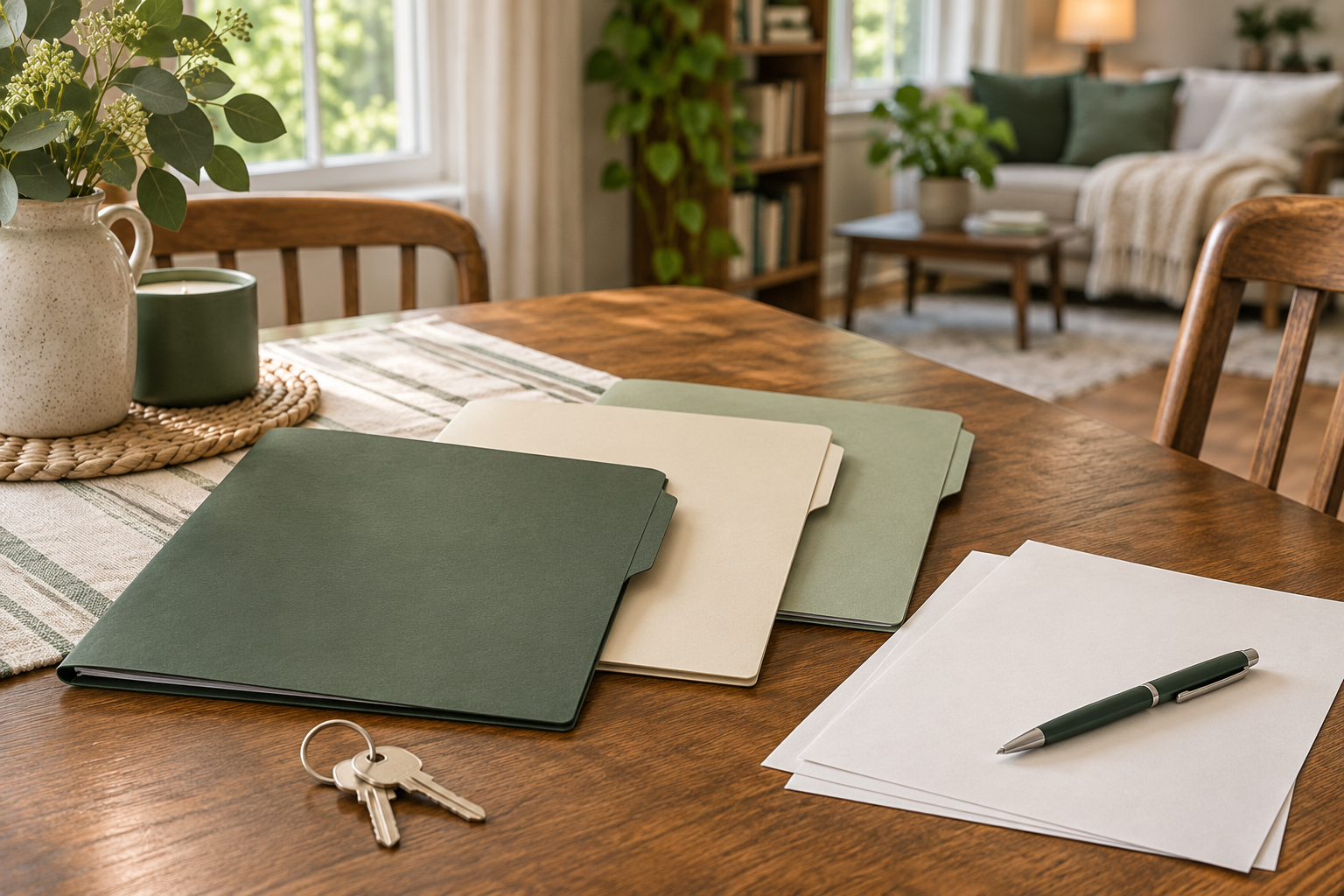
New AI-generated illustration. Not an actual listing, client or transaction.
Getting ready to sell often starts with the visible things: clearing a room, cleaning the windows or choosing a date for photographs. I would add one quieter task near the beginning: gather the records you already have about the property.
That does not mean you need a perfectly organized archive before we talk. A few folders and a list of unanswered questions are a useful start. My opinion: finding information is easier when it is part of preparation rather than an urgent search prompted by a question during the sale.
Start with work performed on the home
Collect available invoices and records for repairs, replacements and improvements. You might have documents for a roof repair, heating equipment, plumbing work or a remodeled room. Keep the description of the work with the date and provider information rather than relying only on a total paid.
If you have permit or inspection records, keep those with the related project. An invoice, a permit and a final inspection record are different documents. Avoid treating one as proof of everything else. When the records leave a question, flag it for follow-up with the appropriate office or professional.
Gather information about equipment and ongoing arrangements
Set aside available warranties, service history and manuals for equipment you expect to remain with the home. If a warranty may matter to the sale, its transfer requirements deserve checking rather than an assumption that it passes automatically to the buyer.
If applicable, locate HOA correspondence and documents, or agreements connected with solar equipment and other ongoing services. These are starting materials for review. Your agent can help identify what additional or current documents need to be requested for your particular sale.
Create a separate “need to check” list
It is normal to remember an approximate year or to have an incomplete file. Write down what you remember, identify it as an estimate and note what would help clarify it. An old email, a service provider or a records request may be a useful next step.
I would rather keep an unanswered question visible than make the folder appear complete by filling the gap with a guess. If a document cannot be located, discuss that with your agent instead of assuming the missing record makes the underlying question disappear.
Use the folder to support the disclosure conversation
Gathering records is an organizational step, not a substitute for required disclosures or professional advice. California’s Department of Real Estate explains that seller disclosures address property condition and other relevant information. Your specific obligations should be reviewed with your agent and, when needed, qualified legal counsel.
Keep original records intact. Share documents through an appropriate channel after reviewing them for unrelated personal or account information. You do not need to put private paperwork in a social-media message to begin a seller conversation.
A simple way to begin this week
Create three folders: “Repairs and improvements,” “Equipment and agreements,” and “Questions to resolve.” Add what you already have. Keep a short index so you can find it again. The aim is useful organization, not a new project that delays your first conversation about selling.
Whether your home is in Modesto, Tracy, Turlock or another community CorePath serves, we can start with your goals and the information available. From there, we can identify what needs attention before the home goes on the market.
Schedule a home strategy session, or call/text (209) 225-9782. Direct mobile: (415) 515-6553. Email: jose@corepathre.com.
Background resource: California Department of Real Estate: First Home California, disclosure information. This is an organizational starting point, not an exhaustive disclosure checklist.